I felt my pulse hammer in my ears. “We?”
“Harold and I,” she clarified. “He can’t manage the stairs at our place anymore. You have plenty of room. It only makes sense.”
“It makes sense,” I repeated, looking straight at Ethan.
He said nothing.
Not even a weak objection.
That silence wasn’t neutral.
It was a choice.
The next five days felt like erosion.
Marjorie “improved” my pantry and tossed out the expensive spices my sister had gifted me because they were “too exotic.” She hid my chef’s knives in a drawer so they wouldn’t “intimidate Harold.” She stuck Post-it notes on my refrigerator with meal plans I hadn’t requested. She commandeered the television every night.
She drifted through my house wearing my clothes, leaving little comments behind her like breadcrumbs:
“You work too much.”
“You’ll understand real priorities one day.”
“Ethan needs a calmer influence.”
And Ethan?
He didn’t argue with her.
He didn’t defend me.
He just avoided my eyes.
That kind of silence doesn’t avoid conflict—it reinforces it.
On the fifth night, I stood in the hallway listening to Marjorie on the phone, laughing.
“Claire will adjust,” she told someone. “She always does.”
Something inside me stopped burning.
It froze.
Clean. Clear.
And that’s when I decided I wouldn’t adjust.
I would exit.
I didn’t pack dramatically. I didn’t slam doors.
I waited until they were asleep.
Then I left.
No explanation.
No warning.
No fight.
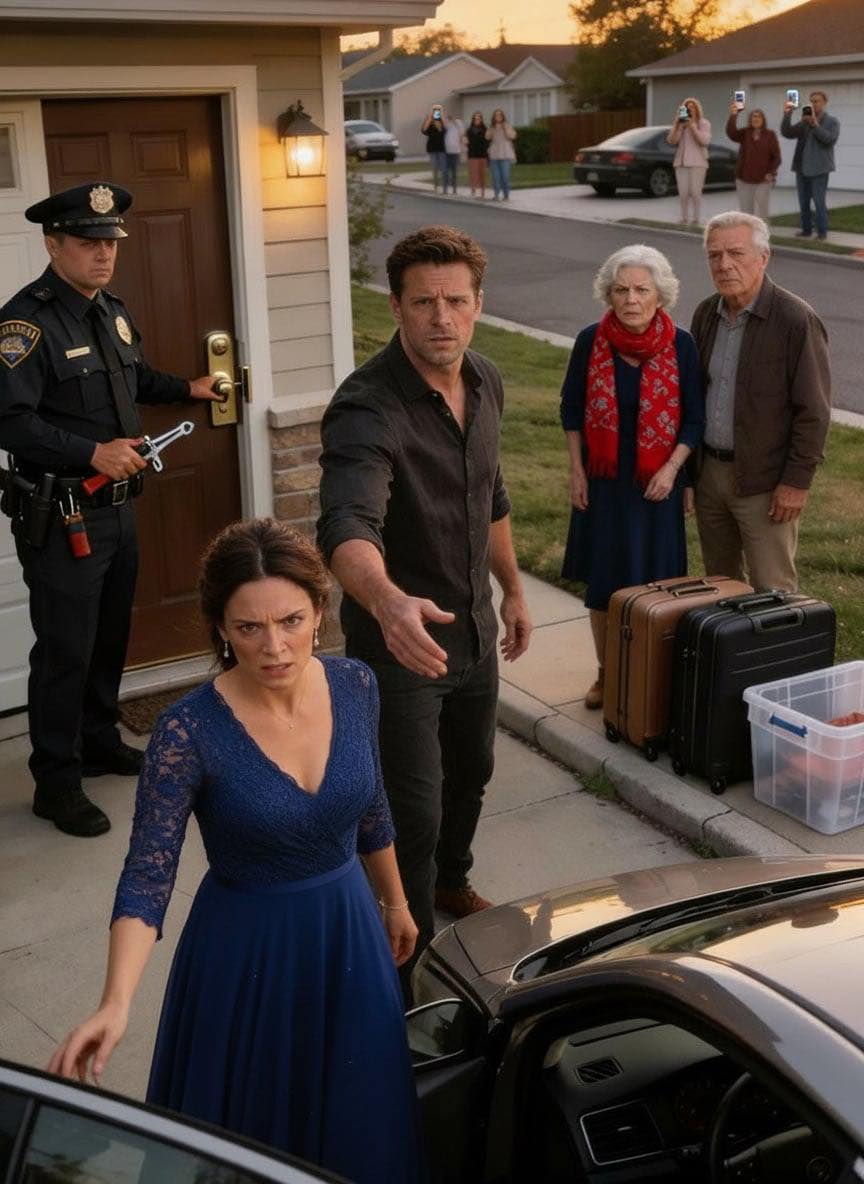
What showed up on the doorstep the next afternoon was a moving truck.
Followed by a locksmith.
Followed by legal paperwork taped neatly to the front door.
Because what Marjorie hadn’t known—what Ethan had conveniently forgotten—was that the house was in my name. I’d bought it before we married. I’d paid the down payment. I’d handled the mortgage.
And I had never added Ethan to the deed.
The paperwork outlined temporary occupancy terms and a 30-day vacate notice.
There were also copies of a consultation letter from my attorney regarding separation.
Aby kontynuować czytanie, kliknij ( NASTĘPNA 》) poniżej !